The Camino de Santiago: Baggage, Lightening the Load, and Letting Go
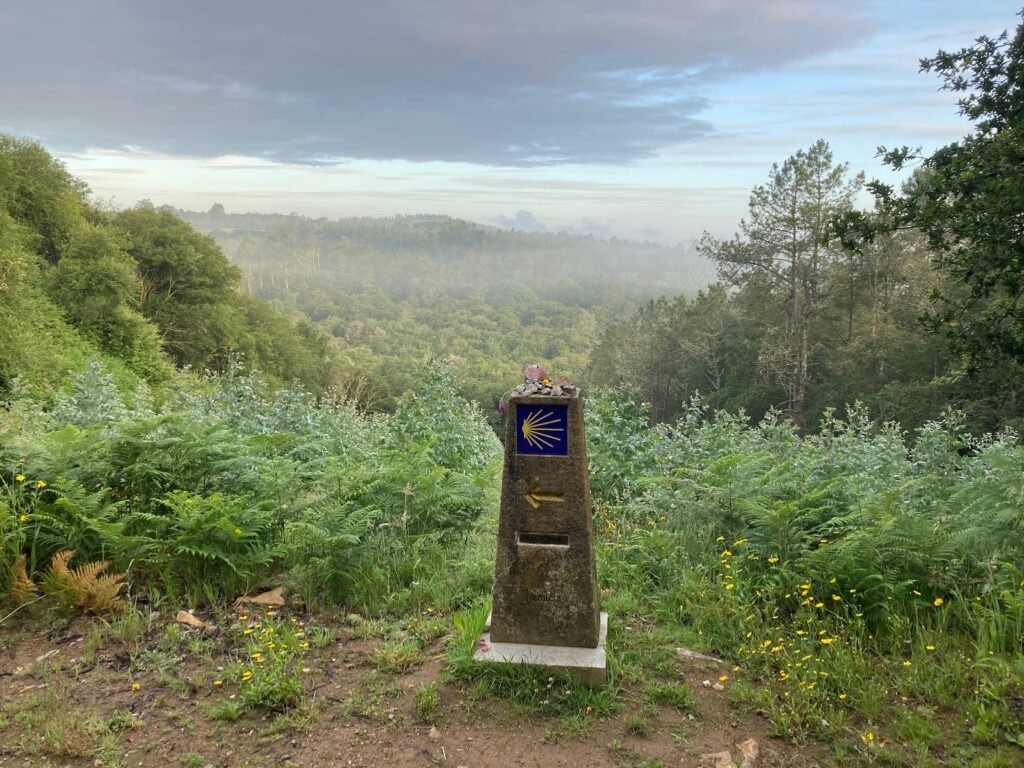
I’ve walked the Camino de Santiago on three occasions so far: the Camino Francés, a Francés/Norte combination, and the Camino Inglés beginning with the Celtic Camino in Ireland (Bray to Dublin). Each one left its own mark on me.
Each Camino was one of those rare experiences, almost impossible to find back home, where anonymity felt like freedom. Nobody cared what I did, what I earned, how big my house was, or what car I drove. The common interest was simply community and the journey.
And yet that very first Camino showed me just how much baggage I’d been hauling around for most of my life — not only physically in my rucksack, but also in my head and heart. The impression stayed with me, and when I returned, I set about lightening my life by choosing a new direction and letting go of much of the “stuff” that filled my home (which I also sold). I split things roughly three ways: a third sold or passed on to friends, a third donated to charity, and the remaining third stored away for when I returned from further travels. I even let go of my much-loved Harley Davidson, my much-loved VW, and eventually my much-loved home.
The Camino also surfaced old wounds. For many years I’d carried the barbs of comments from others that I was too soft, too sensitive — that I needed to toughen up and grow a thicker skin. Over time, those comments hardened into shameful beliefs about deficit and dysfunction, aspects of myself I felt I had to hide or grow out of. But step by step along the Camino, I began to see sensitivity differently — not as weakness, but as a source of care and compassion.
Also, on the long periods walking alone, with nothing but my thoughts to keep me company, many memories resurfaced — including one particular one. For many years after it happened, I never spoke with anyone about a deeply significant experience I’d had — one that, at its simplest, told me there is a greater reality than the one we usually believe in. On another level, it was utterly transformative.
Why didn’t I share it? Partly because I was certain most of the people I knew wouldn’t understand it — or me. And partly because at the time I was working in mental health services, where an experience like that, especially combined with the events leading up to it, might well have seen me on the other side of the system as an in-patient. Jung, had he been my therapist, might have called it a “dark night of the soul.”
Walking the first Camino gave me the time and space to revisit that experience — not as something strange or shameful to suppress, but as something to integrate into my life. In doing so, it also gave me permission to stop striving to be and do all the things I thought I had to in order to fit in, belong, and be liked. The only true path onwards was the path of being myself. I still feared rejection, yes, but it no longer had the power to rule me.
I’ll write more about my experiences along the Camino in time, but for now I’ll end with this: if you decide to commit to walking it — and it truly is a serious commitment, especially if you take on the 500-mile Camino Francés — be prepared. Neither you, nor your life, will ever be quite the same afterward.
And that’s both the challenge and the gift.
